Urban Inferno · VR storytelling project · Craft
When 90% of players wanted to change how they live.
A VR experience that lets you build a city and feel its heat.
- Felt immersed
- 100%
- Test participants
- 10+
- Usability rounds
- 3
- Role
- 3D designer and animator
- Team
- Cross-functional design and technical teams
- Timeline
- MVP in 4 weeks, 3 test rounds
- Tools
- Blender, Unity, Miro
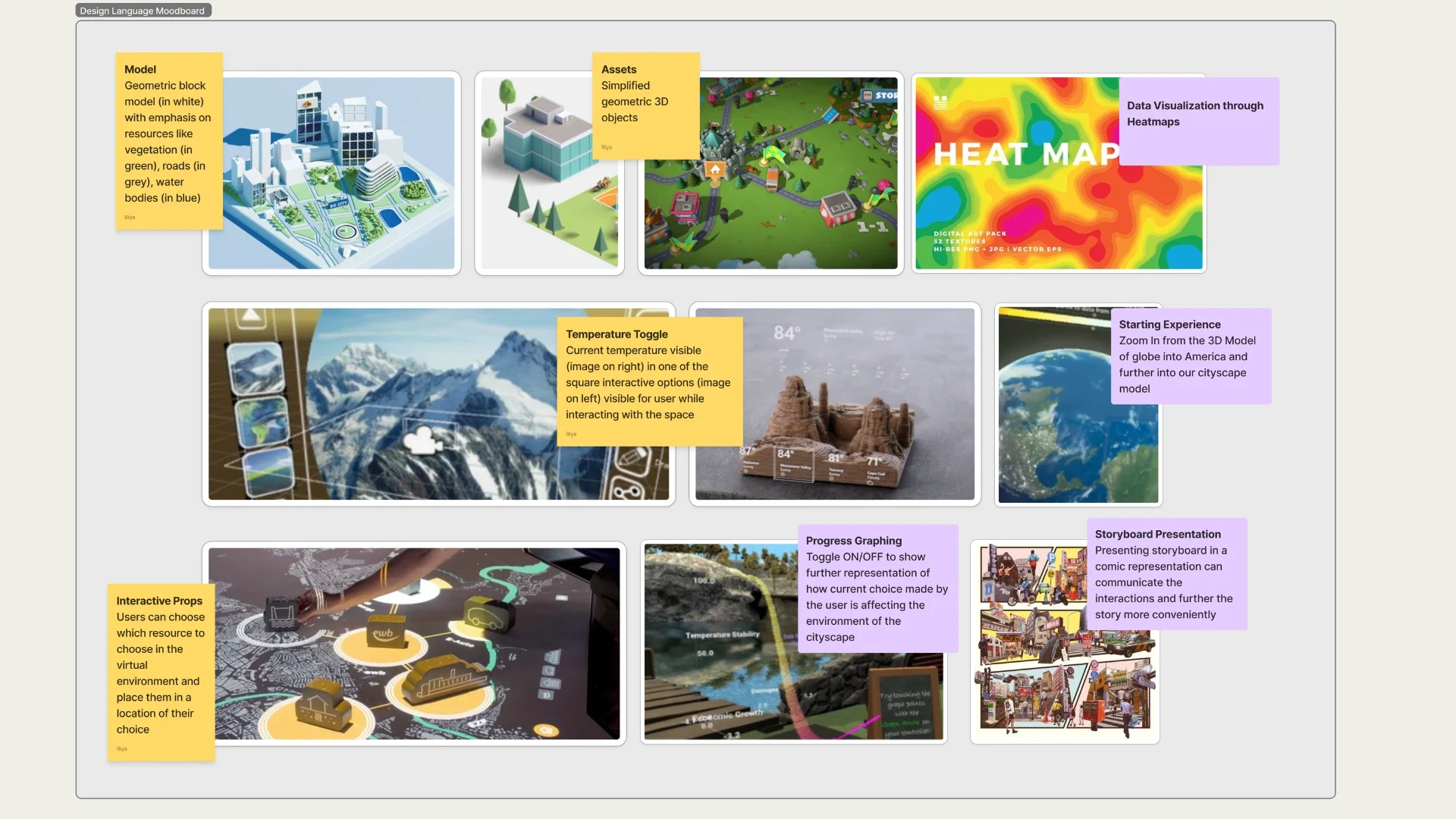
Urban Inferno is a VR piece about urban heat in Arizona. Participants design a “dream city” by choosing road materials, vegetation, buildings and transport, and watch a heat index respond in real time. Breeze, an AI narrator, guides them through. I modelled and animated the assets and scenes and mapped the user journey the other teams built against.
- Of participants felt immersed
- 100%Result
- Wanted to change something in their lifestyle
- 90%Result
- Participants across three usability rounds
- 10+Scale
Research
Real heat data before any polygons.
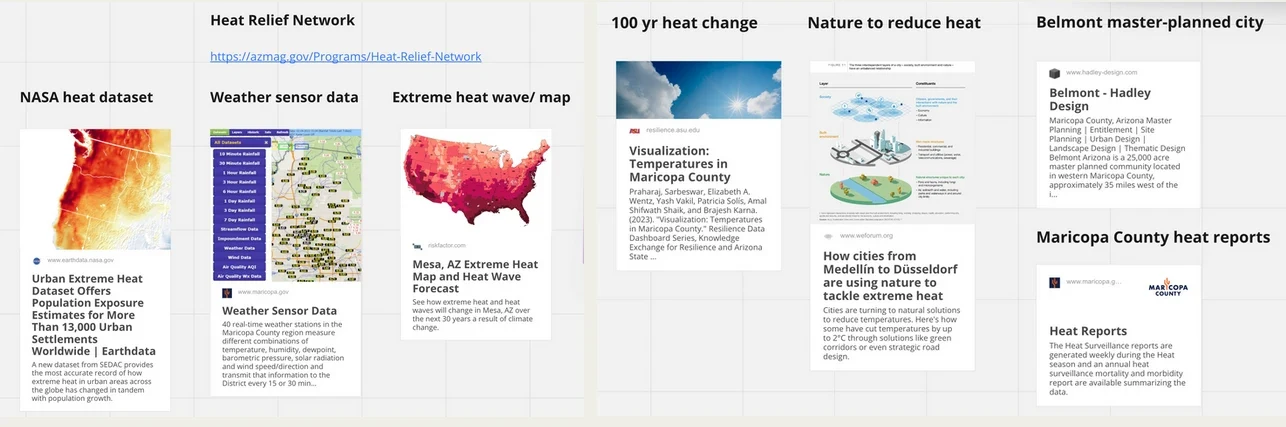
The experience had to be grounded in what is actually happening in Maricopa County. We pulled NASA’s urban heat dataset, the county’s weather sensor network and heat reports, Arizona’s Heat Relief Network, ASU’s temperature visualisations and examples of cities cooling themselves with nature. Bellemont, based on a master-planned city in western Maricopa County, gave us a real place to build on.
Story
A comic first, so every team saw the same experience.
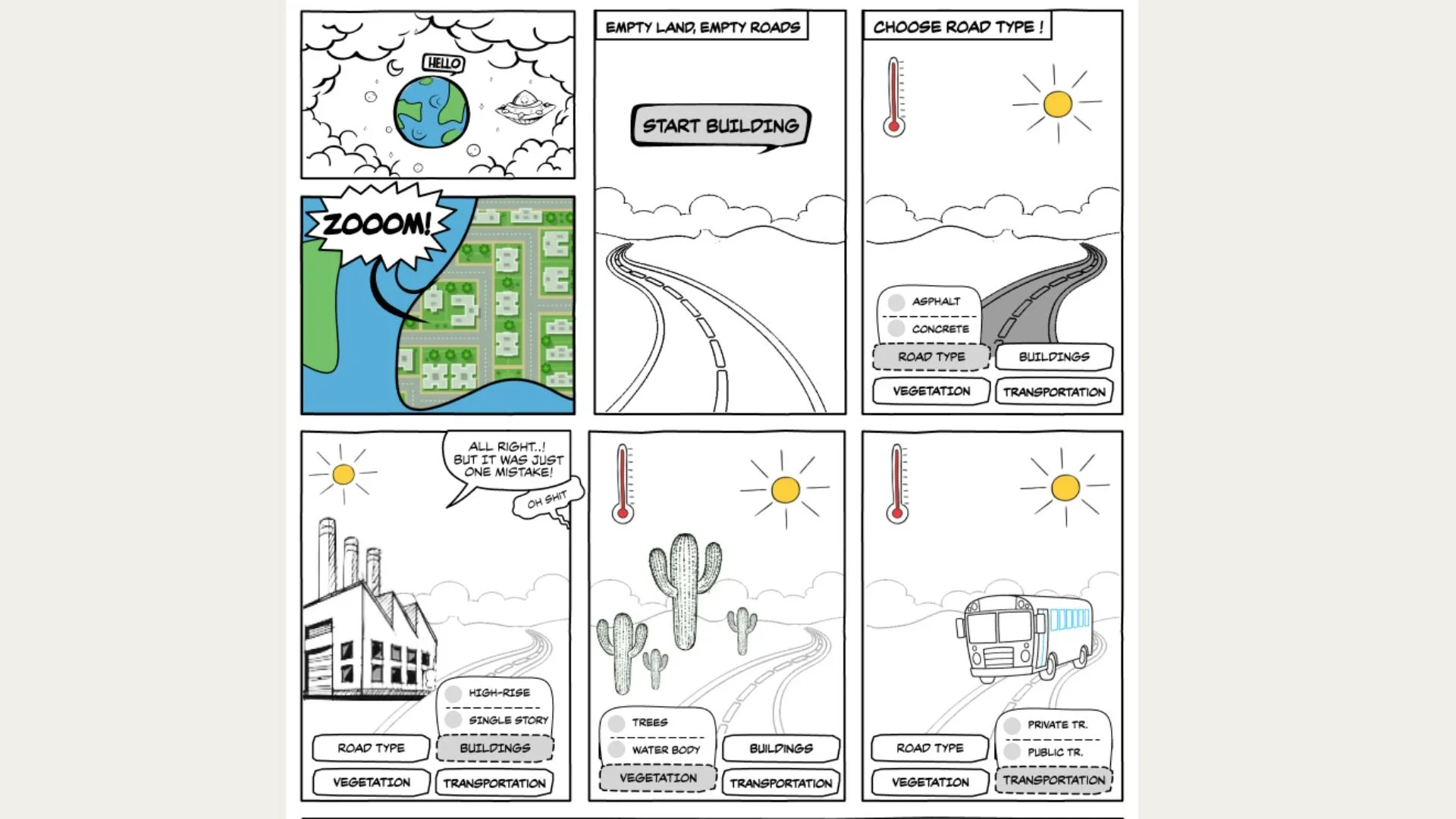
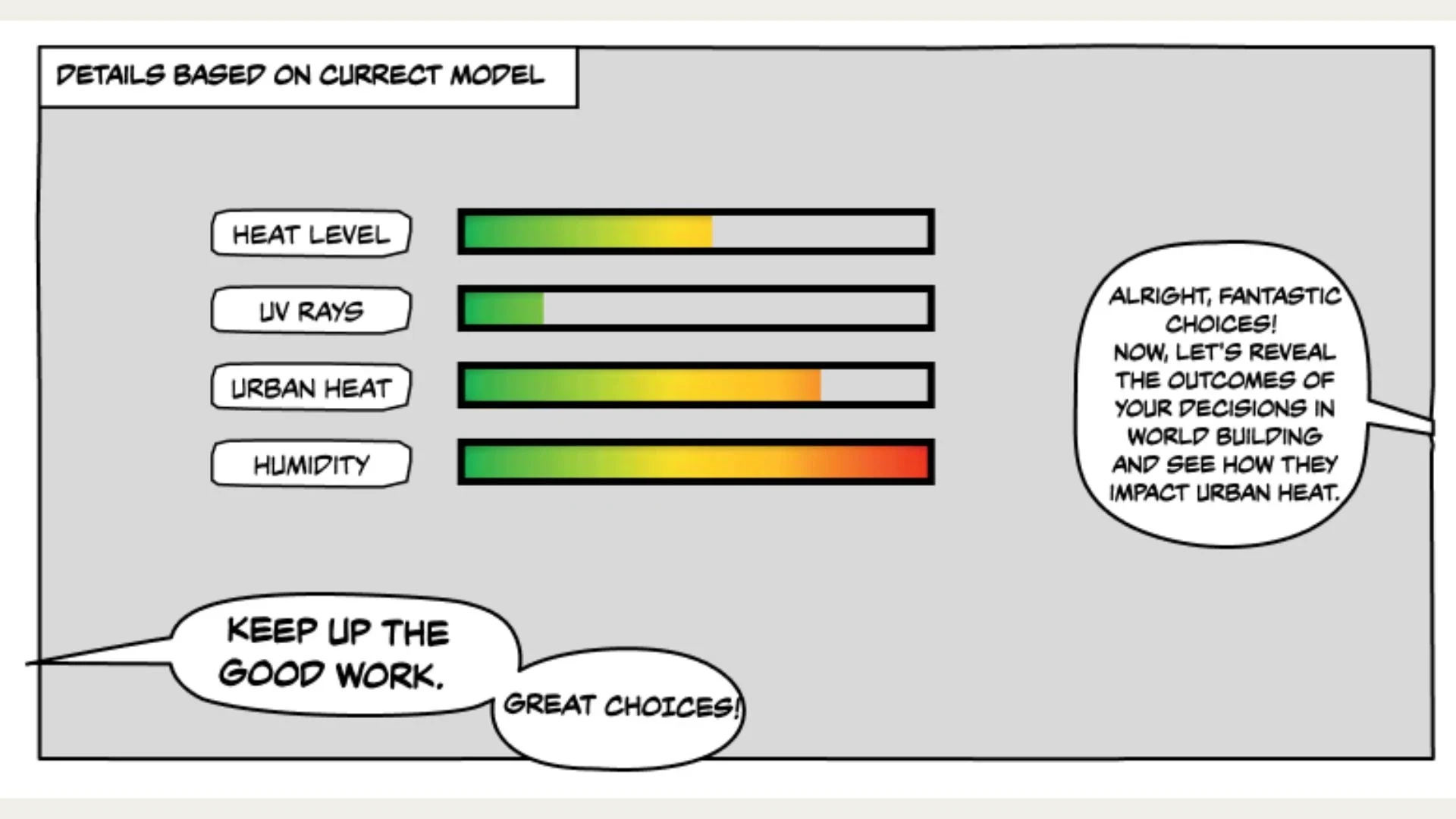
Before anything was built, we drew the whole experience as a comic. Players zoom from the globe down to empty land, then make four choices, each with two options: asphalt or concrete roads, high-rise or single-storey buildings, trees or a water body, private or public transport. A results panel then shows how those choices moved heat level, UV, urban heat and humidity.
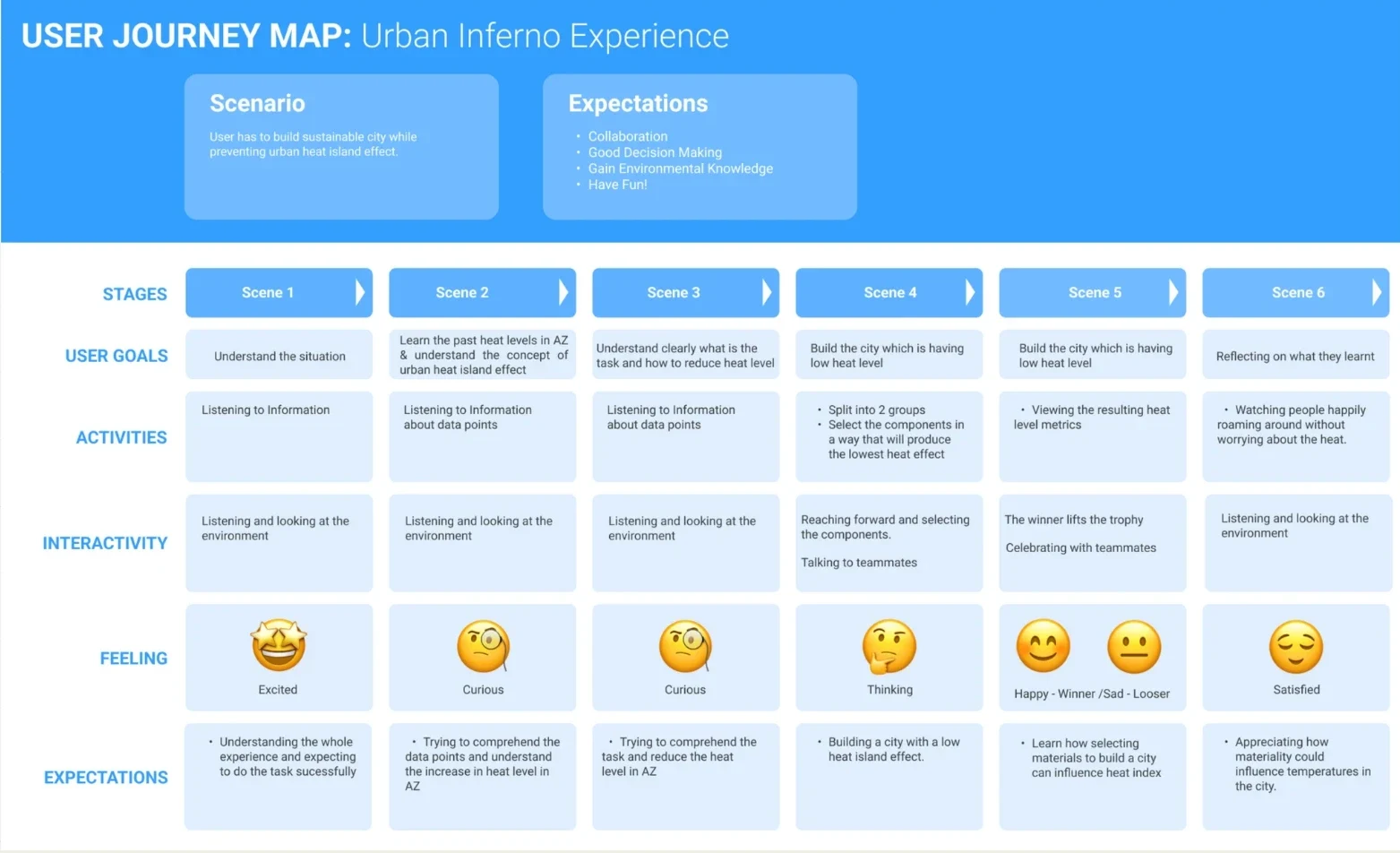
I turned the storyboard into a six-scene journey map: what players want, do and feel in each scene. Two groups compete to build the coolest city, and the winning team lifts a trophy. The design and technical teams built against this map, so a choice made in the headset always traced back to a moment in the story.
Build
From Blender to a VR stage.
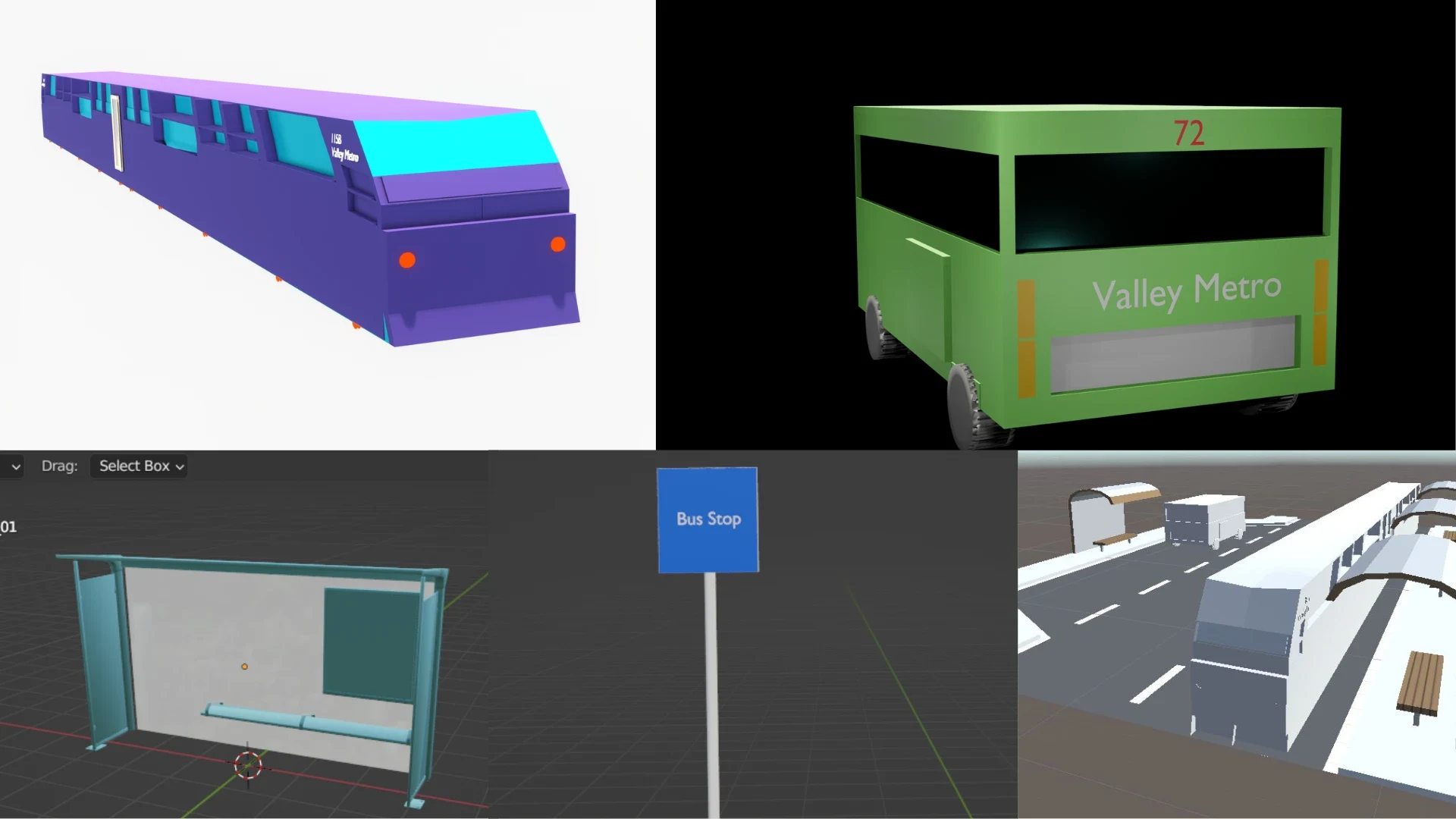
- Modelled the transport choices in Blender: a Valley Metro light rail car, a local bus, bus shelters and stop signs, sized to the city grid.
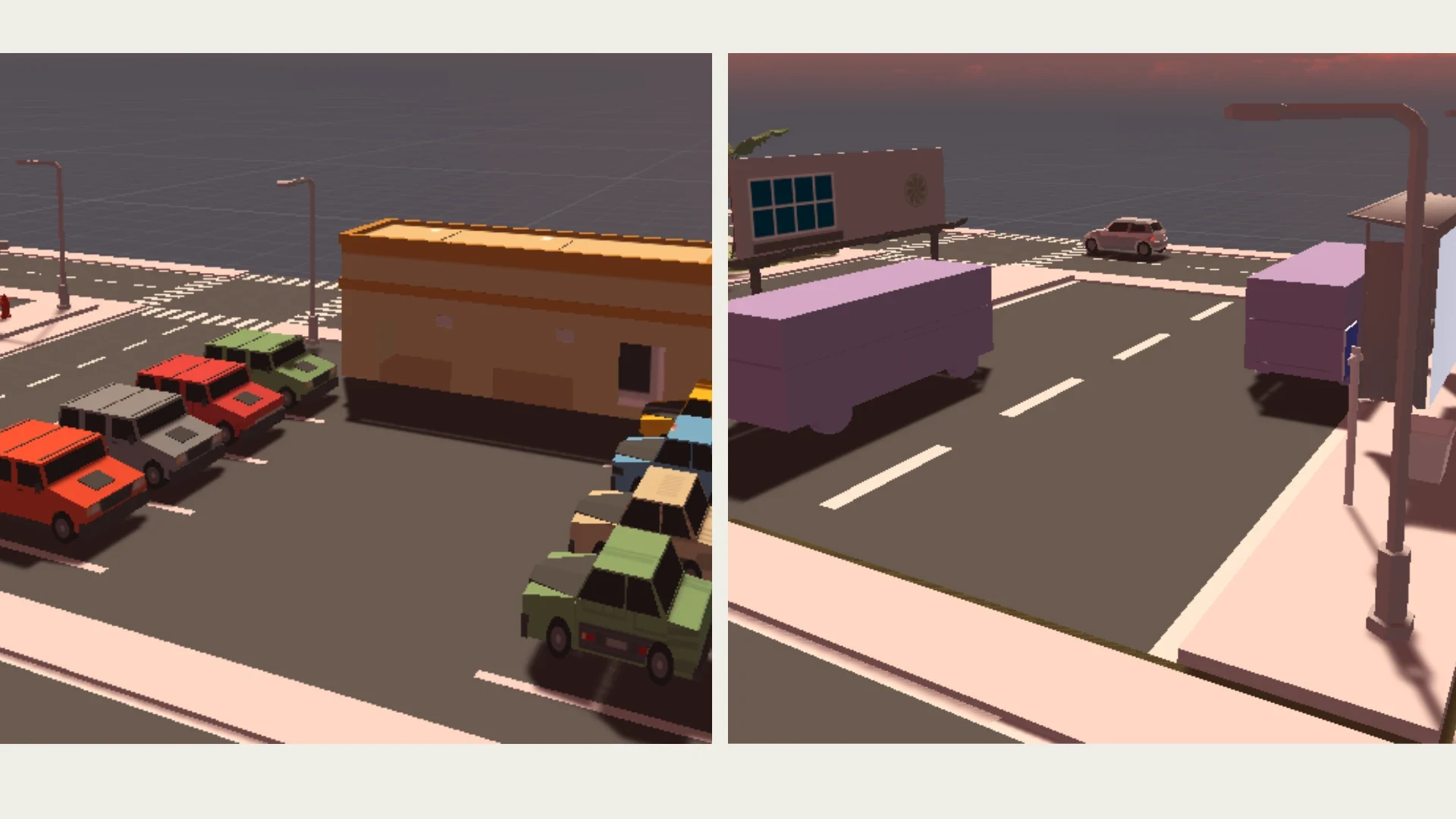
- Dressed the low-poly city in Unity with parked cars, buses and street furniture, so each choice had a visible place on the map.
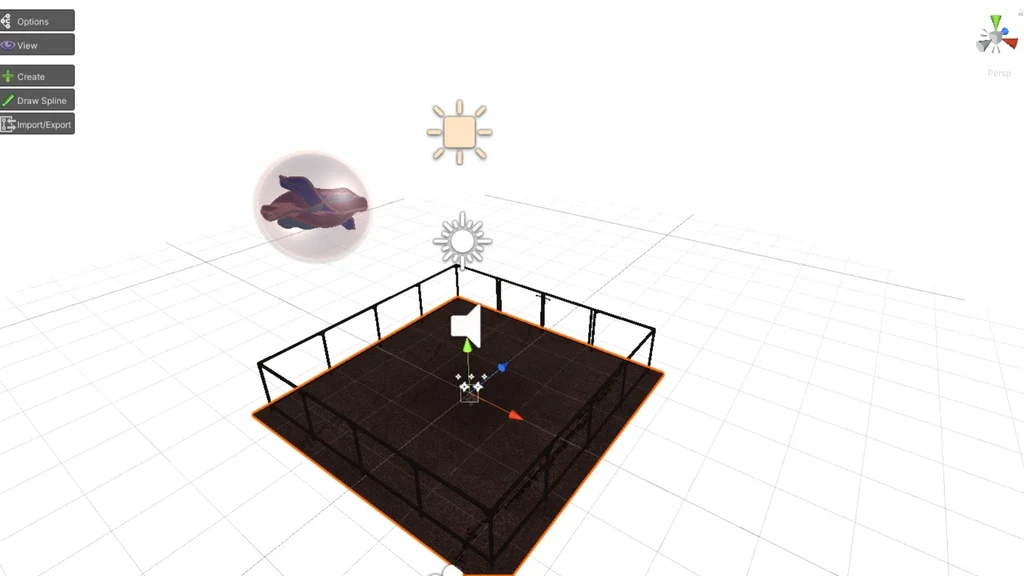
- Built the VR stage: a fenced platform where players stand, with Breeze floating overhead to guide them.
- Animated the opening spaceship, Breeze, a car following waypoints through the city, and the Bellemont desert scene.
Learned
Honest craft notes.
- Procedural Blender materials did not carry into Unity; the bus shipped solid purple.
- Car rotation had to apply only at specific waypoint indexes to look natural.
- Balancing real-time performance with immersion, without overwhelming people, was the constant trade-off.